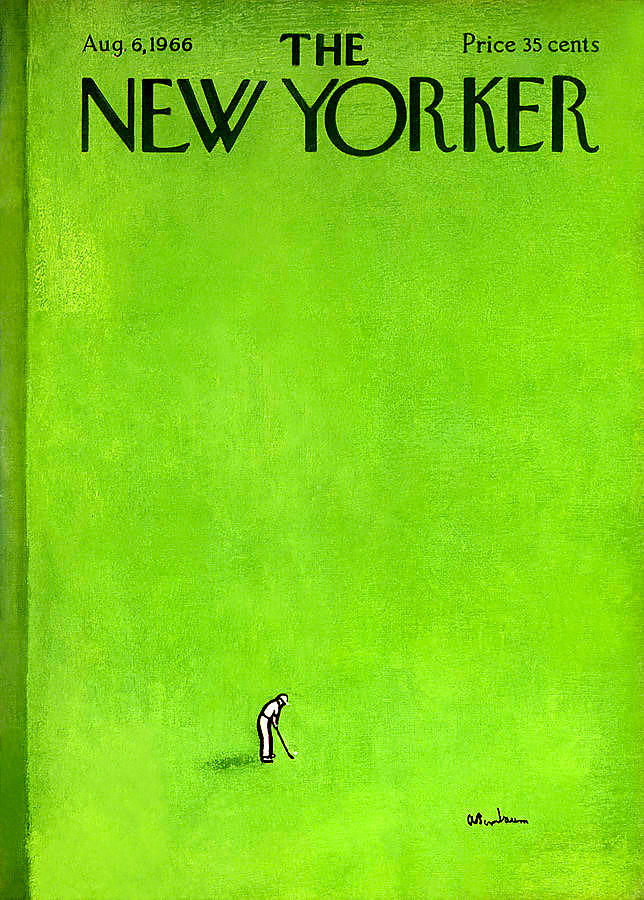
Abe Birnbaum was a celebrated American painter, illustrator, and cartoonist born in New York City in 1899. Over the course of his remarkable career, he painted nearly 200 covers for The New Yorker magazine — a body of work distinguished by its gentle wit, flat planes of colour, and an eye for the poetry in ordinary scenes.
He studied at the Art Students League and exhibited at the World's Fair of 1939 and Carnegie Institute in 1944. A close associate of publisher Ben Raeburn, his illustration work extended well beyond magazine covers: Birnbaum contributed cartoons, spot illustrations, and profiles to The New Yorker from the 1930s onward, and also worked for Harper's Bazaar and other leading publications.
In 1953, his children's book Green Eyes earned him a prestigious Caldecott Honor. Birnbaum's covers often celebrated the rhythms of the American year — summer swims, autumn harvests, winter snowfalls, spring blossoms — rendered in a style that felt both intimate and timeless. He died in 1966, the same year one of his final covers appeared on the magazine's summer issue.